Poser Chess Set
A Chess Board That Transforms Into a Wall-Mounted Display
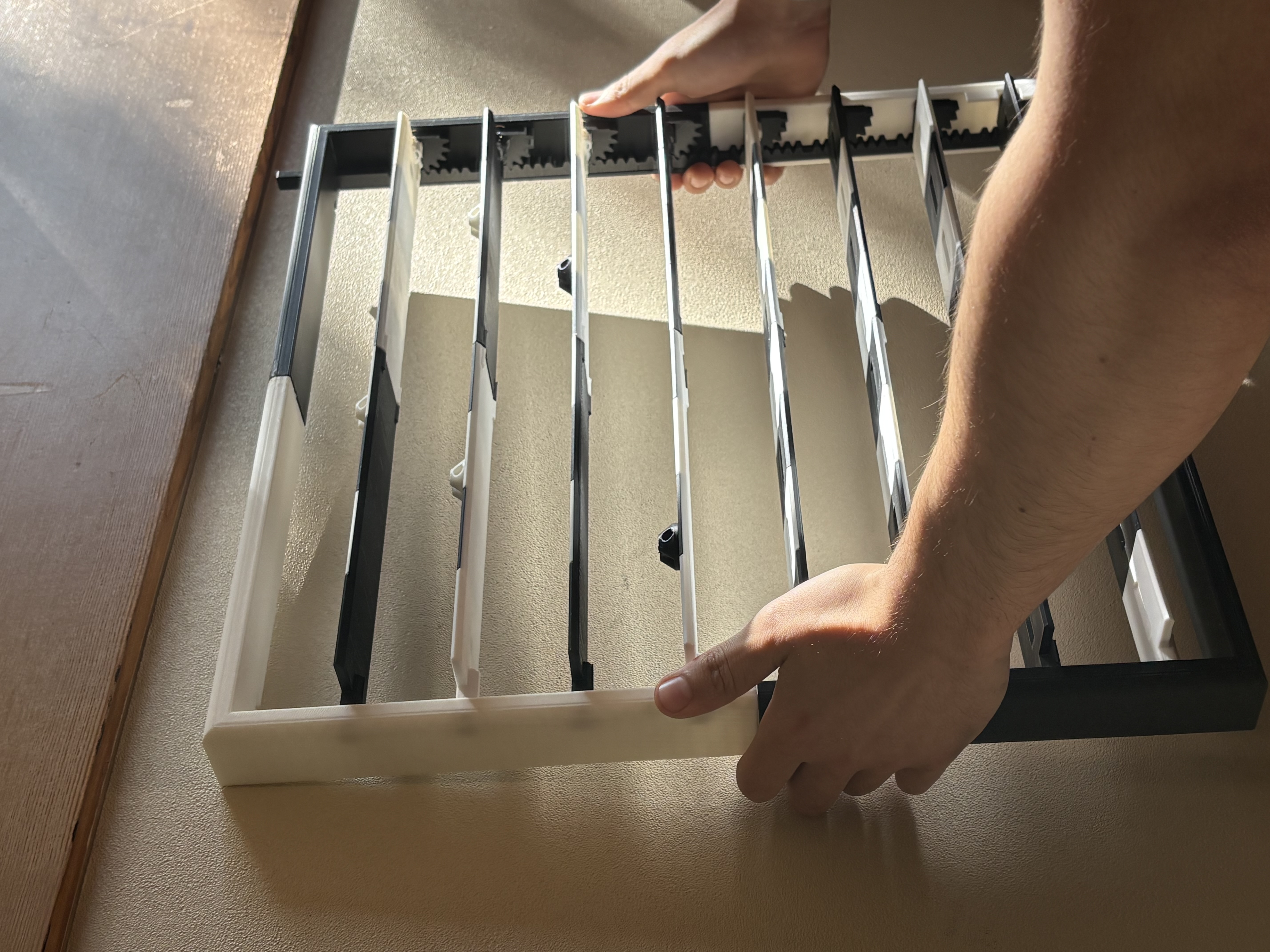
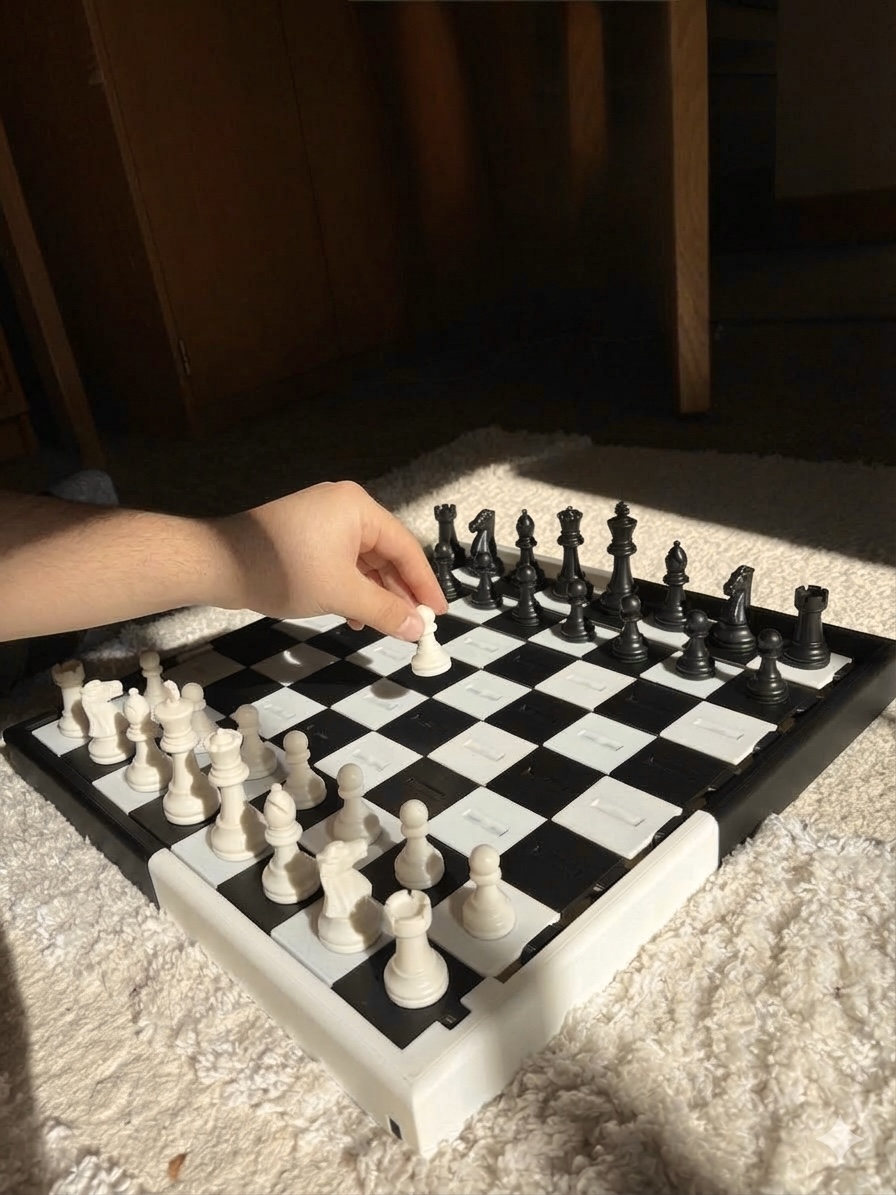
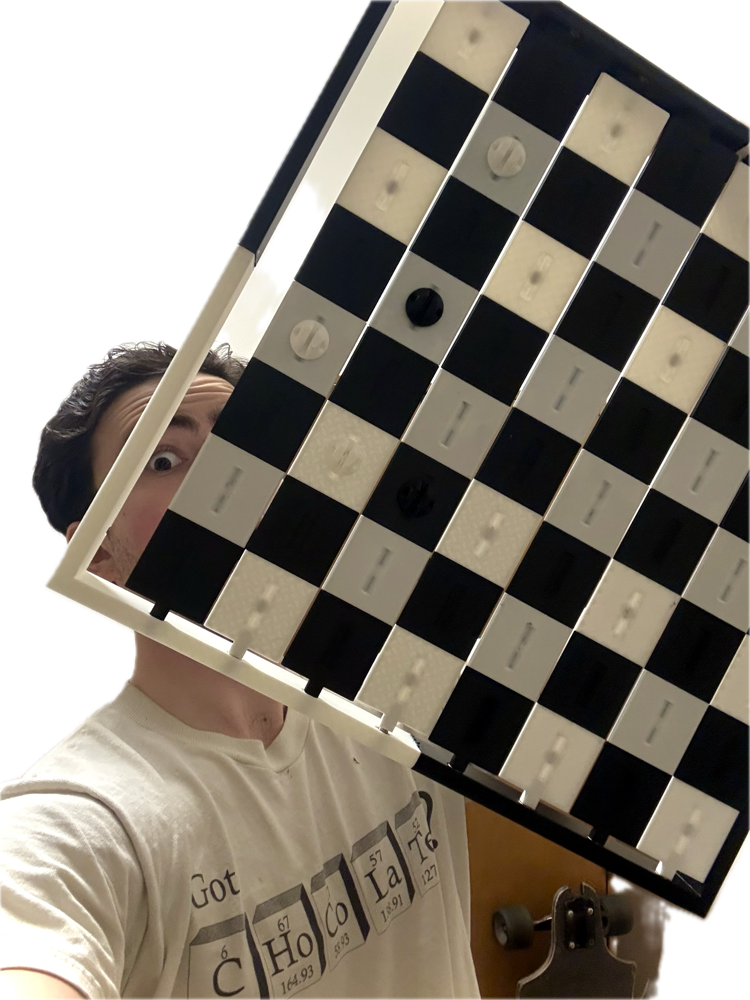
The chess board is designed to be displayed proudly on a wall between games.
The biggest design challenge was scale: the full board needed to be roughly 20 inches by 20 inches, which was too large for a single print bed. That meant breaking the entire board and every piece into printable sections, then reassembling them with 96 embedded magnets.
The ranks have to stay thin to rotate, so the real pieces are flat and laser cut. They slot into magnetic holders sitting on each square. The pieces in the photo above were generated with AI: part of what I was playing with on this project was how you hand your design intent to a new set of tools.
The Journey
Ideation → Prototyping → Execution
Ideation
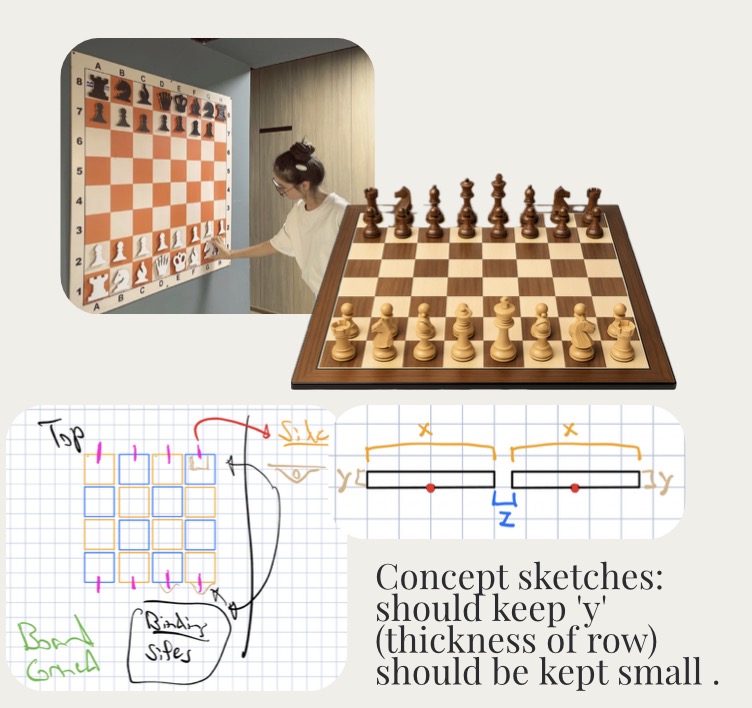
Early sketches and concept exploration. Early inspiration from a magnetic wall-mounted chess set, which I wanted to combine with the satisfying nature of a wall-sized regulation chess set.
Prototyping
Testing every connector, hinge, and mechanism individually before committing to a full print run. The first idea was to need no mechanism at all: keep each row bottom-heavy and let it self-align to gravity. Time, materials and the rest of the budget said otherwise, so I pivoted to a rack and pinion that rotates each rank ninety degrees. The FEA paid for itself: adding fillets at the joints took the minimum safety factor from 4.5 to 5.05 and pulled max displacement from 1.75 mm down to 1.68 mm.
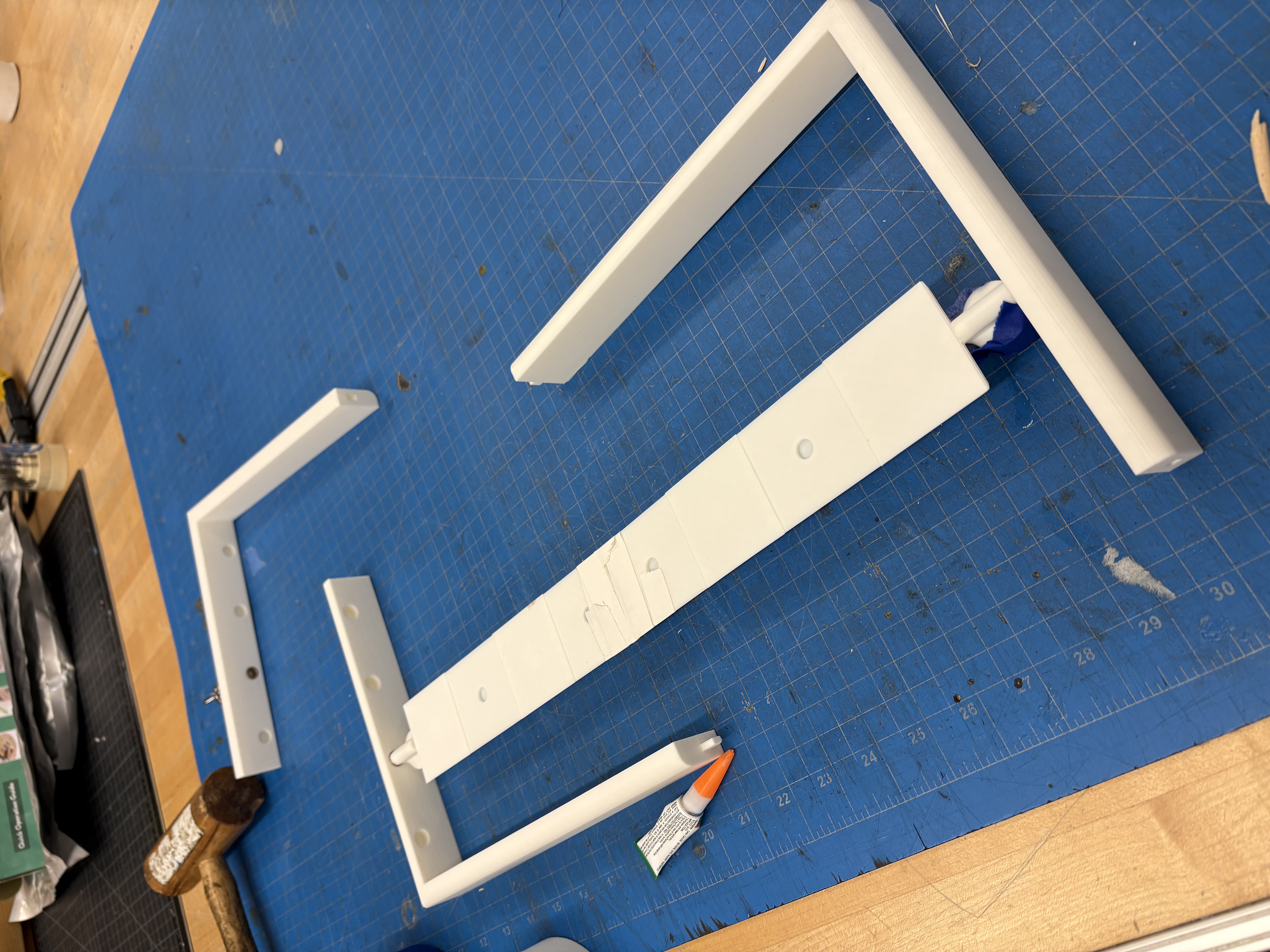
Frame rails and a row strip from the first approach, where each row was meant to be bottom-heavy enough to find level on its own. Time and materials ended it.
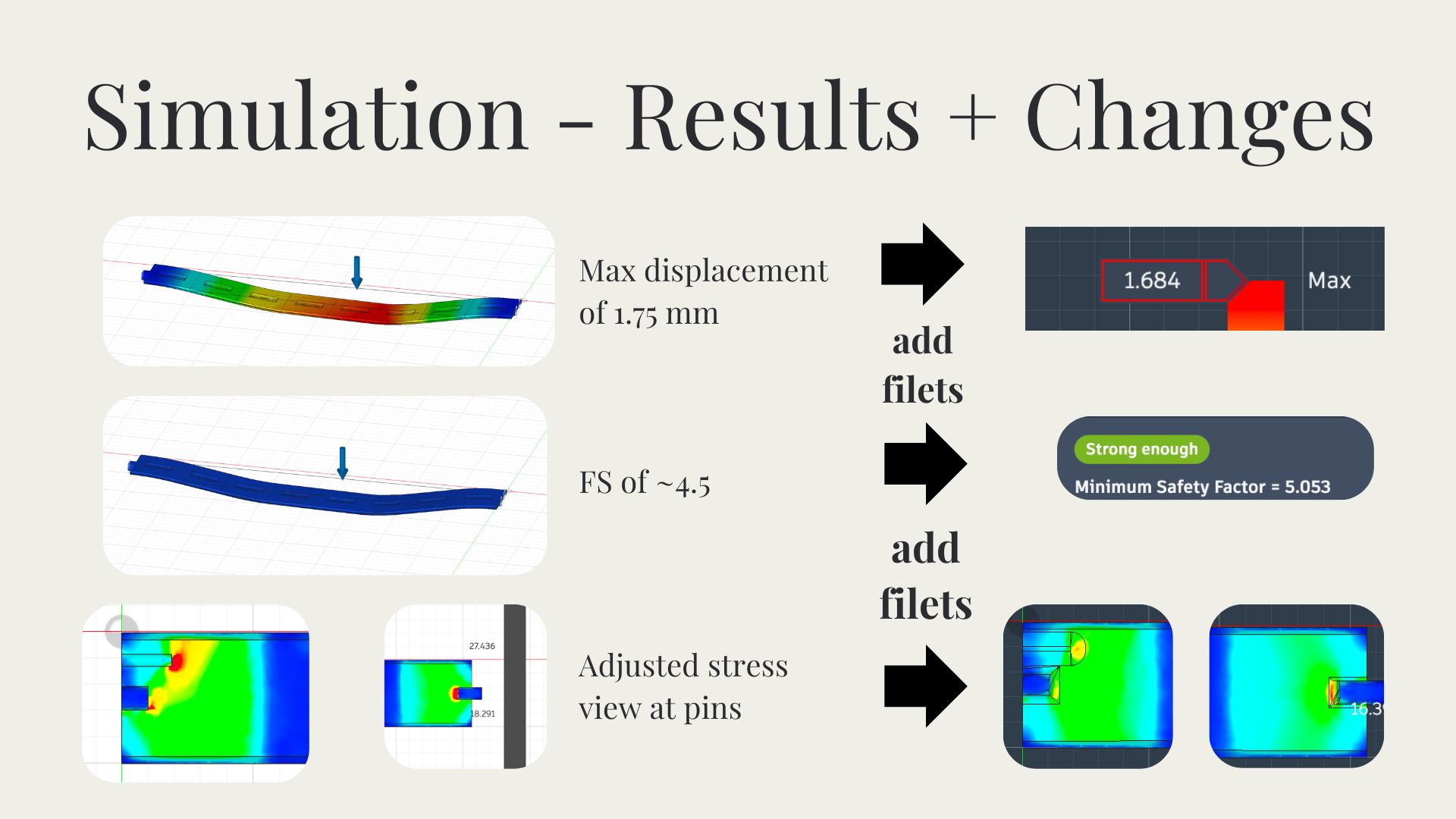
Adding fillets at the joints took the minimum safety factor from 4.5 to 5.05 and pulled max displacement from 1.75 mm down to 1.68 mm.
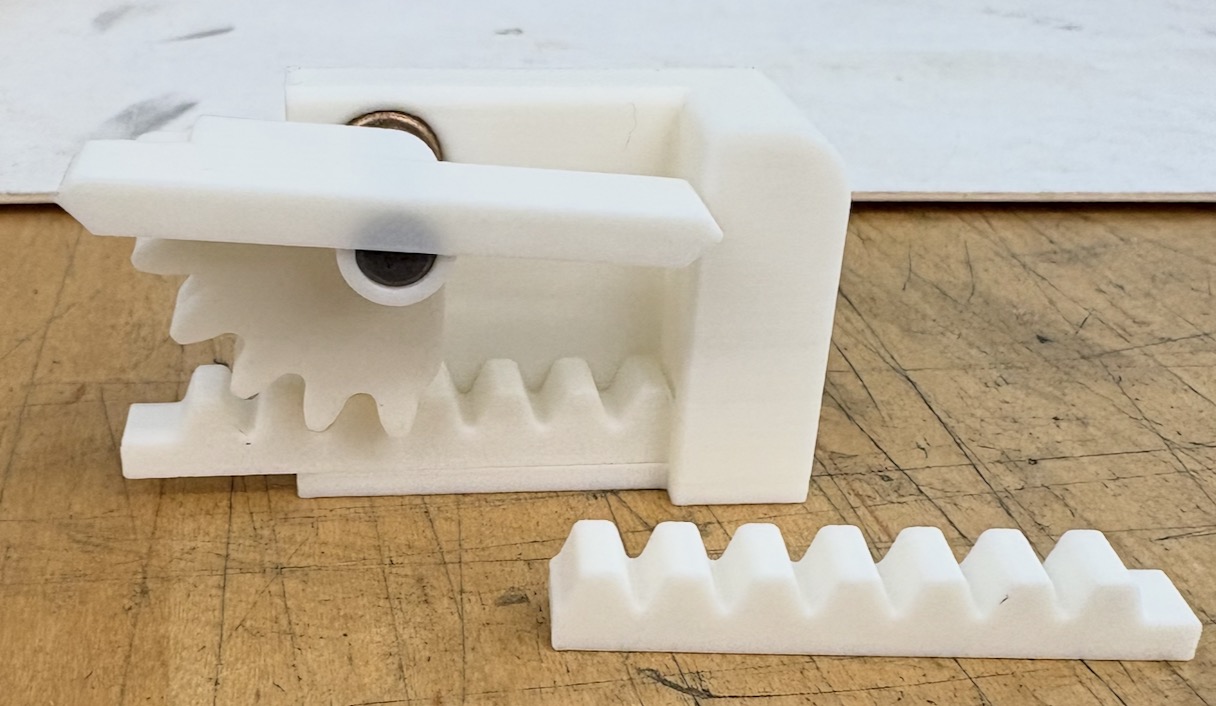
The mechanism I pivoted to: a printed spur gear on a brass bushing driving a rack, which rotates each rank ninety degrees.
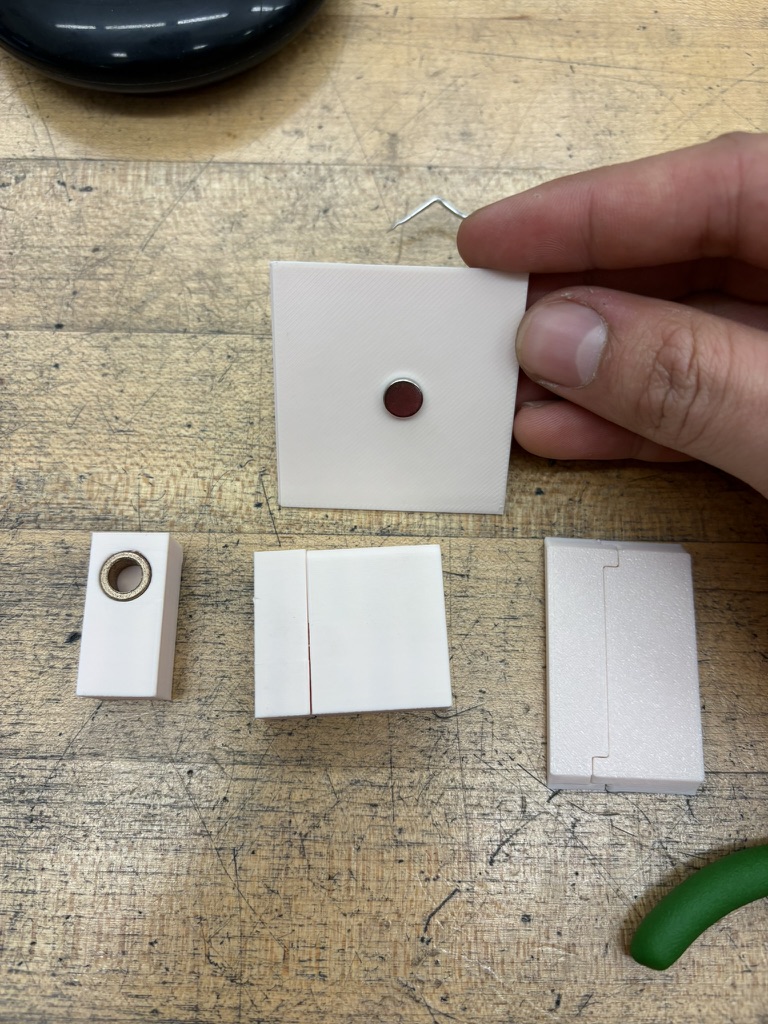
Press-fit tests: a magnet into a board tile, a brass bushing into its block. Ninety-six magnets in the finished set keep every piece oriented.
Execute
All 46 individual pieces were tracked on a Google Sheet and printed, then assembled using 96 embedded magnets to keep every piece correctly oriented when posed out from the wall.