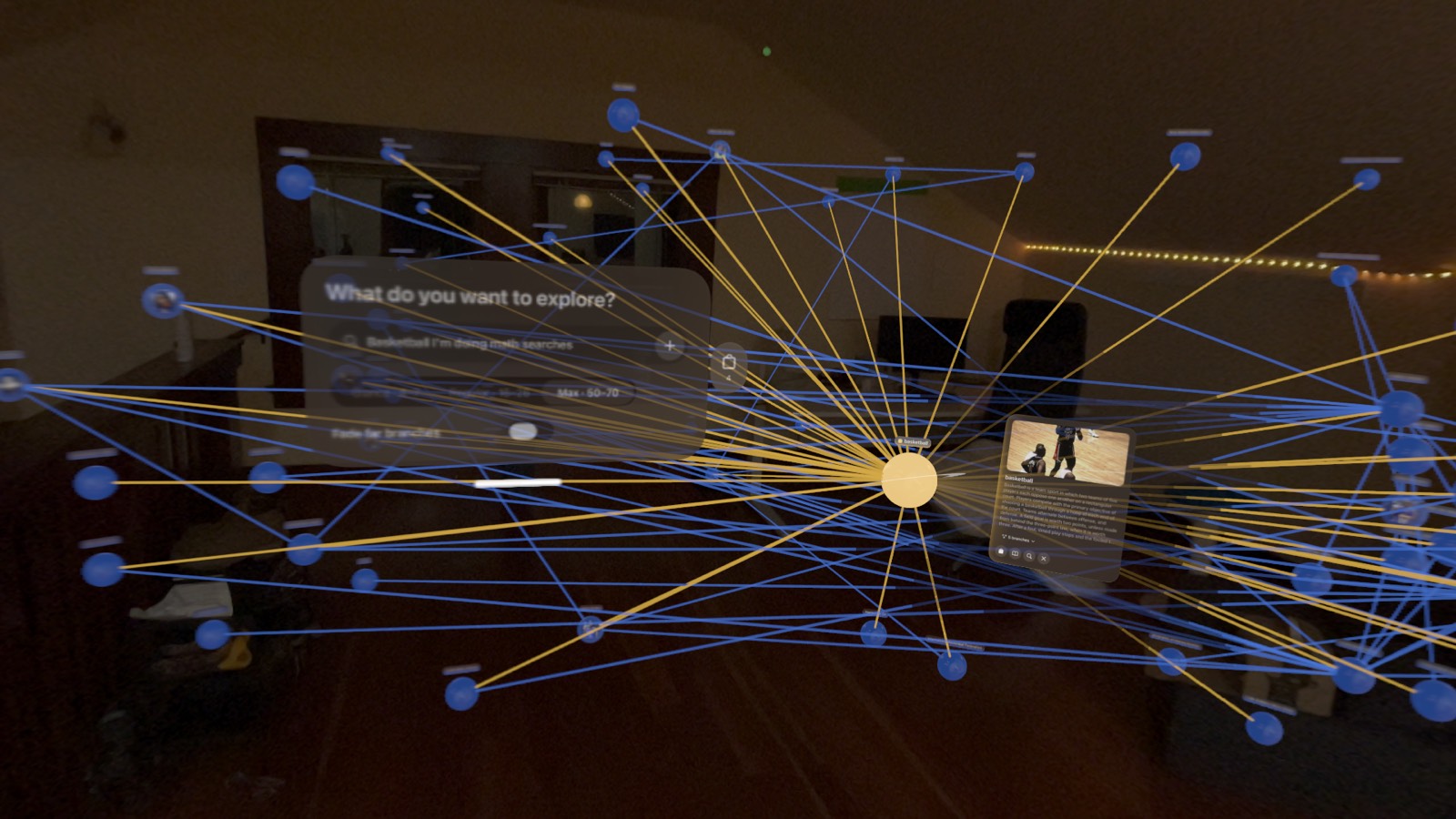

This project started after one of my many passion-fueled YouTube deep dives, when I came across a graph of Wikipedia, a video that blew up years ago. That idea fascinated me. To me, Wikipedia stood in for all of human knowledge, and here was a new way to see it, and most importantly, how every piece connected to one another.
Even back then, from high school on, I wanted to walk through that graph and feel the wonder and connection in it. It was almost like looking up at a starry night and feeling that sense of awe, but around human knowledge. Building something I could actually walk through, something that made the idea concrete, was not something I could even envision.
Then I was lucky enough to explore it further in Virtual People at Stanford. I got to really flesh out what it could be, writing up ethics reports and the overall idea of the project, and editing a video by hand to bring the idea into the world Watch ↓. But it was just a dream, and I definitely couldn't build it myself.
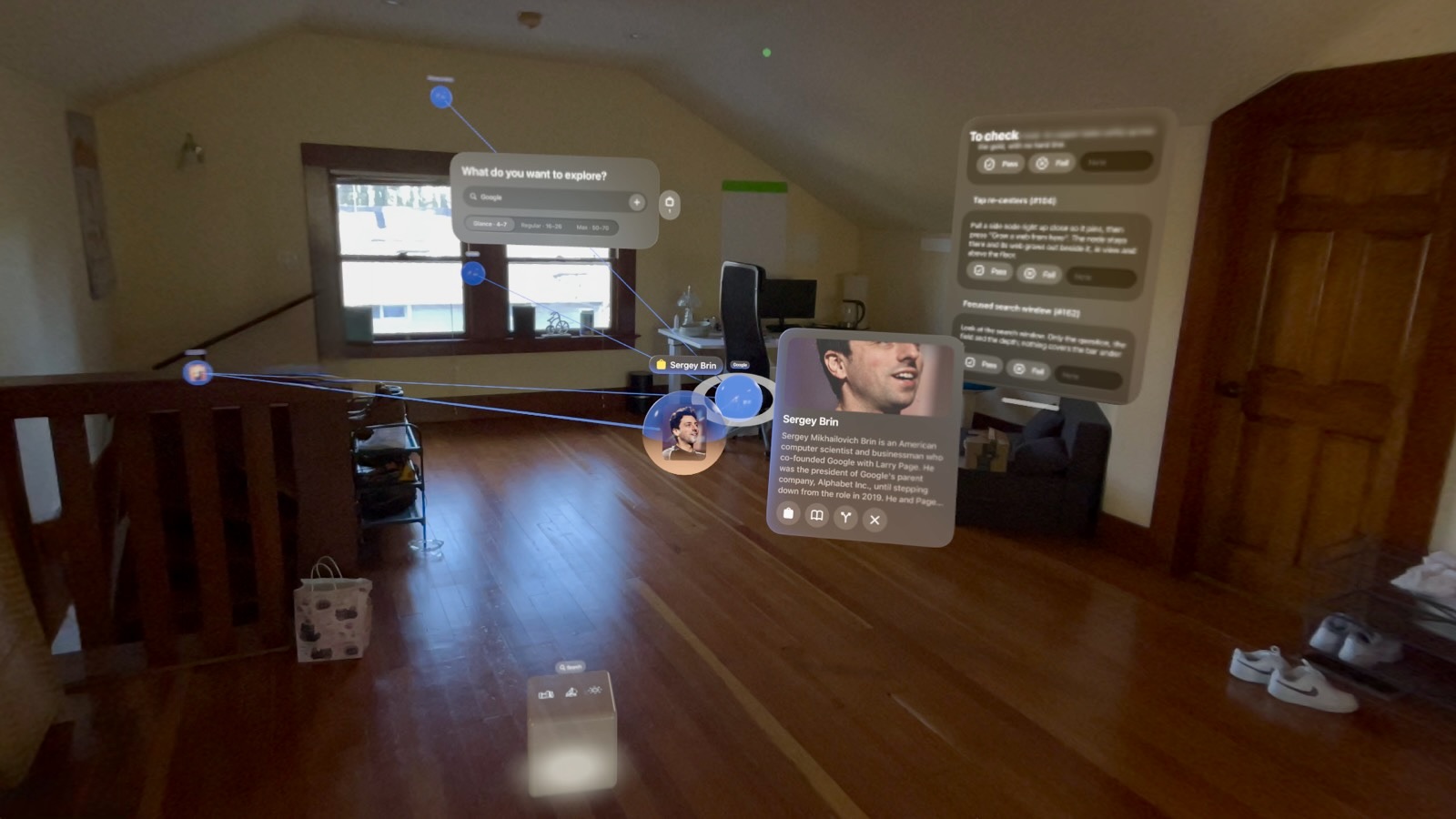
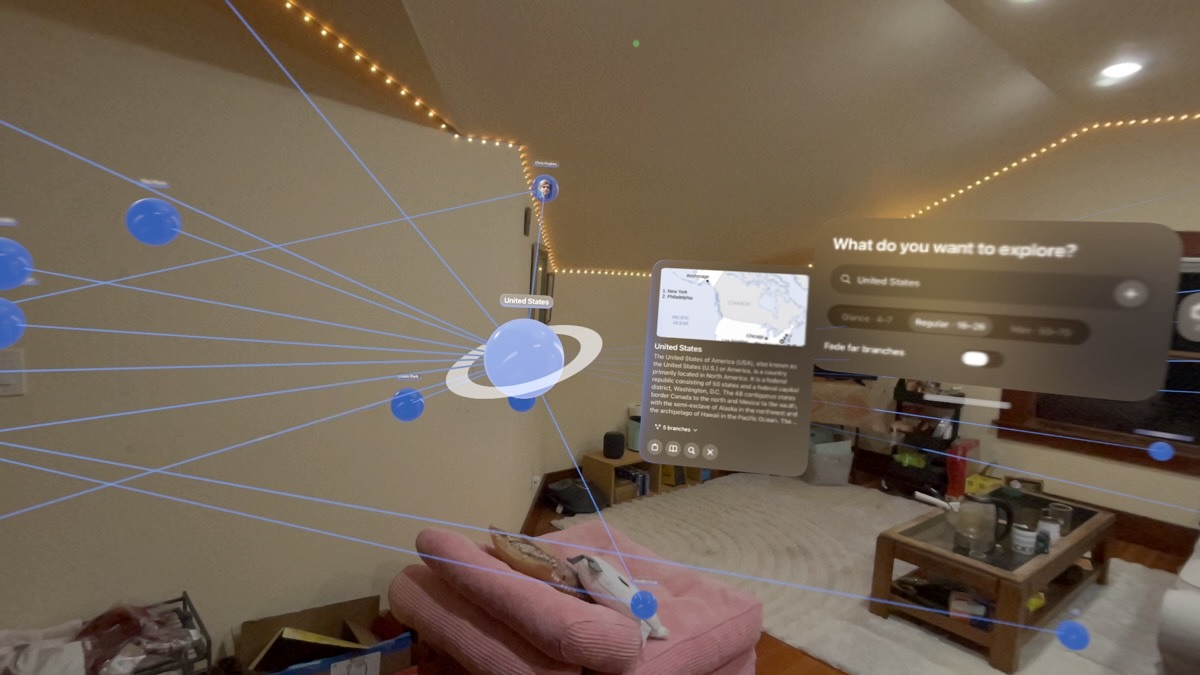
That changed after I jumped into RBV, Reality Becomes Virtual, a project at the Virtual Human Interaction Lab. Seeing how powerful AI agents had become, I wanted to find out if the idea I had built up could become real. After many more explorations into APIs, the vector spaces AI uses to hold ideas, the sources of data I could pull from, and the 3D visualizations that already exist, it came to life Watch ↓.
Our current search strips facts of their surroundings, and I wanted something that puts them back. I wanted the feeling of going to the library as a kid for one book and finding, right next to it, a book that's even better.
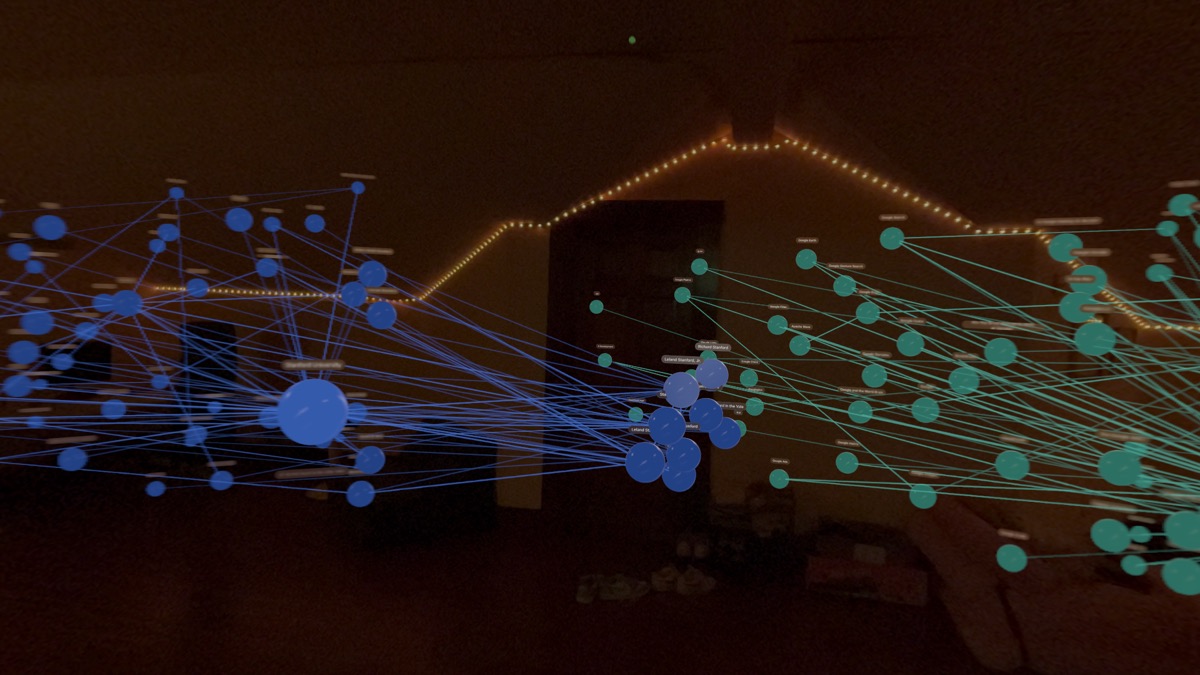
That is what I have been creating here: a web of all human knowledge that surrounds you like a starry night, free for you to explore.
 Granola, writes down everything I say as I go. It's been a fabulous way to capture the process.